Building Lifesaving Skills from the Classroom Up
Every day, millions of children head to school to learn math, science, and language arts. But what if they also learned how to save a life?
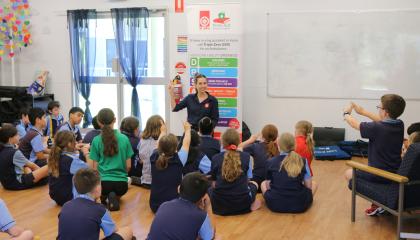
Our FREE First Aid in Schools program is transforming education by equipping students with practical, potentially life-saving skills. These initiatives go beyond textbooks, teaching young people how to respond confidently and effectively in emergencies both inside and outside the classroom.
What is the First Aid in Schools program?
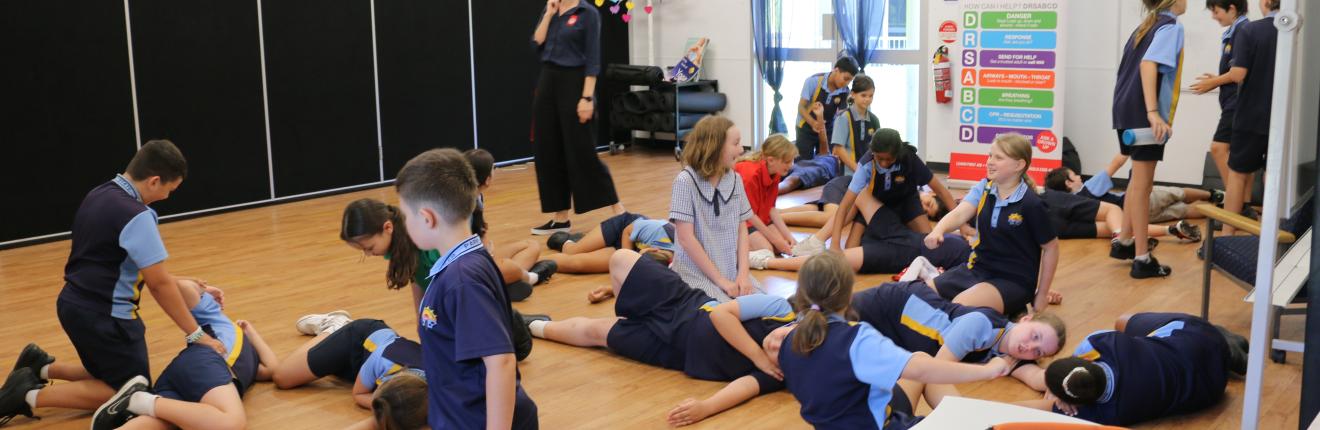
Our First Aid in Schools (FAiS) program provides free, age-appropriate first aid education to primary school children and is designed to build confidence, emergency awareness, and early lifesaving skills. Typical learning areas include:
- How to call emergency services effectively
- Basic wound care (cuts, burns, nosebleeds)
- CPR (Cardiopulmonary Resuscitation)
- How to use an AED (Automated External Defibrillator)
- Recognising signs of choking, allergic reactions, or shock
- Staying calm and safe during emergencies
Delivery is usually hands-on and scenario-based, using demonstrations, role play, and guided practice so students retain both the knowledge and the confidence to act.
Why does First Aid Education matter?
Builds Confidence and Responsibility - When students know what to do in an emergency, panic is replaced with purpose. First aid training empowers young people to step up rather than stand by.
Faster Help = Better Outcomes - In many emergencies, the first few minutes are critical. Teaching children how to recognise danger, call for help correctly, and take simple protective actions can significantly improve outcomes.
Confidence Reduces Panic - Untrained bystanders often freeze. Training replaces uncertainty with simple decision pathways: recognise → call → act safely.
Promotes Safety Awareness - Students carry first aid knowledge beyond the classroom, with families often noticing positive behaviour changes after the program. This includes safer play, quicker reporting of injuries, and more awareness of risk.
What are the common challenges?
Some schools are concerned about constraints like limited time, tight budgets, or scarce resources. However, we offer the program free-of-charge to help ease these challenges. These programs can also be integrated into existing health, physical education, or life skills classes, allowing schools to include them without placing extra strain on academic schedules.
Another common misconception is that children are “too young” to learn first aid. Research shows that even young students can grasp basic emergency concepts like how to call for help or place someone in the recovery position.
Kahla McKinless, Commercial Manager at St John Queensland, said the greatest challenge isn’t delivering free first aid training, it’s convincing schools that prevention and preparedness deserves a place on the priority list.
“When safety is treated as optional, opportunity is quietly lost. Yet every conversation, every partnership, and every school that says ‘yes’ proves that change is possible". Miss McKinless said.
First aid is not just a medical skill; it is a life skill.
By integrating emergency preparedness into education, schools prepare students not only for exams, but for real-world responsibility. The question is no longer whether first aid belongs in schools, but how quickly we can ensure every student receives this essential training.
Because one day, the life saved could be a classmate’s, a family member’s or a strangers in need.
Enrol in our FREE First Aid in Schools program today by contacting us on 1300 785 646 or via email firstaidinschools@stjohnqld.com.au
Written by Scott O'Connor, Community Education Coorindator