Australia is home to some of the world’s most venomous snakes, and here in Queensland, encounters are an everyday reality. But the most surprising fact about snake bites isn't how dangerous the venom is, it’s where the bites actually happen.
According to data, a staggering 55% to 60% of snake bites occur right in our own domestic environments: in backyards, sheds, gardens, and outdoor entertainment areas. You are far more likely to encounter an Eastern Brown or a Red-bellied Black Snake while taking out the rubbish or tidying up the garden than you are while hiking in remote bushland.
With Queensland emergency departments recording a 15% year-on-year increase in snake bite presentations, pushing numbers above 1,200 annual cases, the danger is escalating. Warmer spring and summer temperatures are shortening reptile brumation (winter dormancy) periods. Coupled with wet La Niña weather patterns driving up rodent and frog populations, snakes are increasingly drawn closer to our homes in search of food and water.
This brings us to a critical question: If you or a family member become one of those 1,200+ cases this year, do you have a dedicated pressure indicator bandage on hand, or just a generic first aid kit?
The Flaw in Your Generic First Aid Kit
When a venomous snake strikes, the venom travels through the lymphatic system, not directly into the bloodstream. The only way to stop this spread and buy precious time for an ambulance is by applying the Pressure Immobilisation Technique (PIT).
Here is the problem: ordinary crepe bandages or triangular bandages found in standard first aid kits do not provide sufficient or continuous tension. To properly collapse the lymphatic vessels, you need medical-grade pressure between 40–70 mmHg.
What You Need: A Dedicated Snake Bite Kit
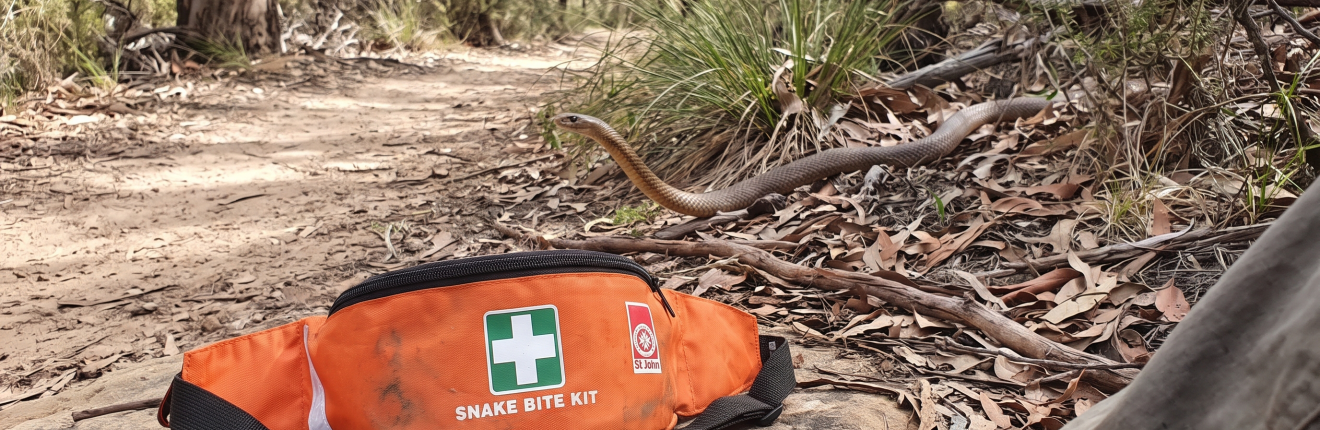
A dedicated St John Snake Bite Kit is engineered specifically for this emergency. The hero of these kits is the heavy-duty indicator compression bandage. These bandages feature printed rectangles that stretch into perfect squares when applied, visually guaranteeing you have achieved the exact medical-grade pressure required to stop the venom.
They also include the necessary splints to immobilise the limb, and permanent markers to mark the bite site for paramedics.
Prepare your home, car, and worksite with the right equipment:
- Snake Bite Bumbag First Aid Kit – Perfect for keeping hands-free while hiking or working outdoors.
- Outdoor & Snakebite First Aid Module – An essential upgrade for your existing emergency kit.
- Snake Bite First Aid Kit – A comprehensive, standalone kit for the home or shed.
Crucial First Aid: What NOT to Do
If a bite occurs, what you don't do is just as important as what you do.
Do NOT wash the bite site: It is a natural instinct to clean a wound, but washing a snake bite can be deadly. Hospital doctors rely on the venom left on the skin to swab and identify the exact snake species using a Venom Detection Kit, ensuring they administer the correct antivenom.
Do NOT cut, suck, or apply a tourniquet: Hollywood gets it wrong. Arterial tourniquets cut off blood flow and cause permanent tissue necrosis and limb loss. Sucking or cutting the wound is completely ineffective and highly dangerous. Stick to the PIT method.
Do NOT let the patient walk or move: Any muscle contraction pumps venom directly into the central circulatory system. The patient must stay completely still, and the ambulance must be brought to them.
In Queensland, a snake encounter isn't a matter of if, but when. Ensure you have the right indicator bandages ready to go. A standard crepe bandage simply won't cut it when a life is on the line.